Company
Timber Base GmbH / UFP Industries, Inc.
Duration
2020 - 2023
Problem
Manual trade and intransparrency
The timber trade faces significant challenges due to its highly manual processes. From forest planning to logging, processing, and shipping, each step involves multiple players and intricate coordination. Communication relies heavily on personal relationships and outdated methods like phone calls, emails, and in-person visits. Further complicating things, agents often facilitate transactions, adding unnecessary layers of complexity and cost.
Solution
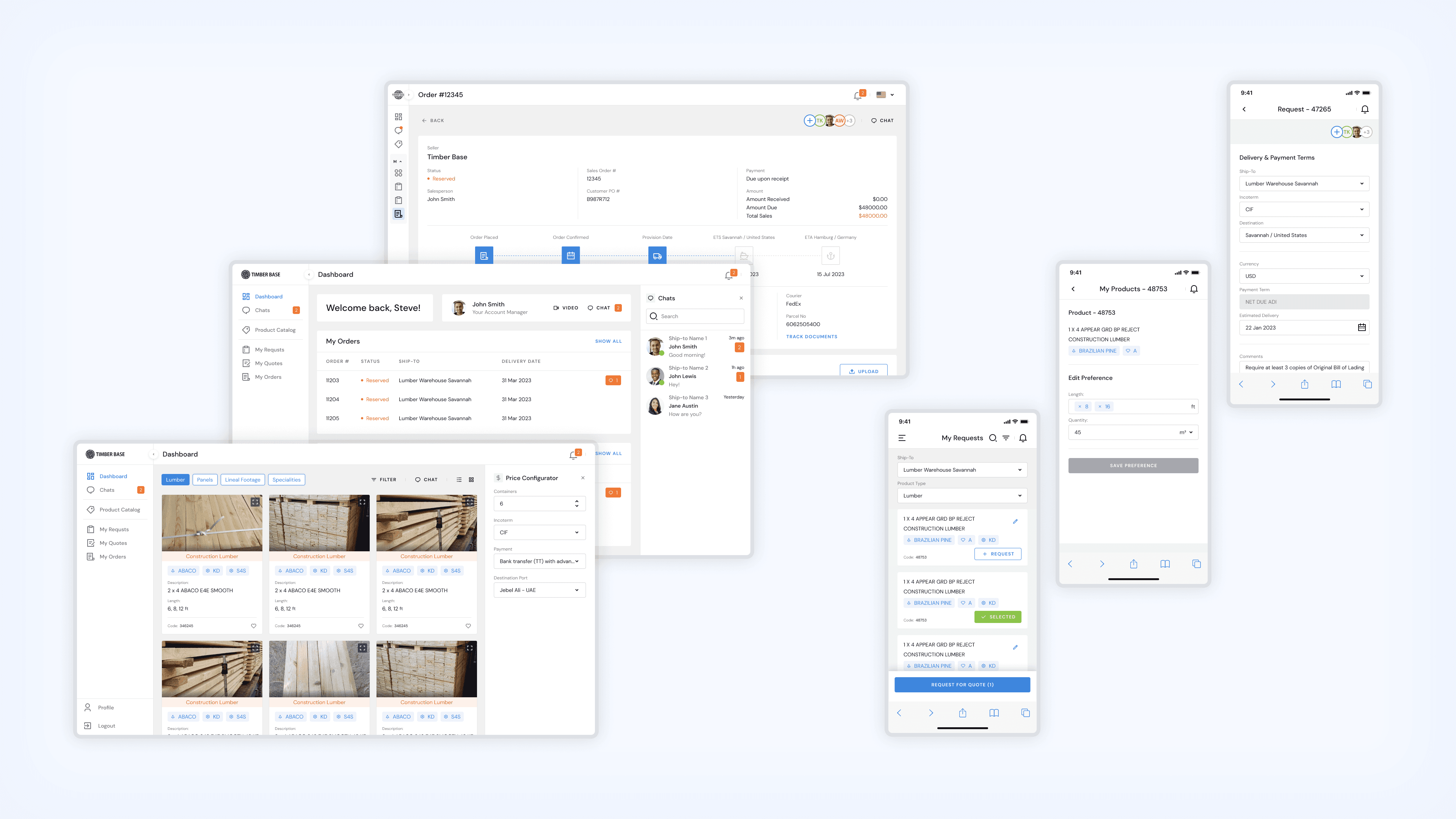
Digitise timber trade & simplify transactions
This solution proposes an online platform to automate processes, reduce paperworks and streamline transactions.
Two-sided online marketplace:
Producers can advertise in-stock supplies, while buyers can submit on-demand requests.
Real-time order tracking:
Provides transparency and easy and timely access to shipping documents (with eventual hardcopies mailed for official purposes).
Direct trade facilitation:
Cut out intermediaries by facilitating direct communication between producers and end-buyers, connecting overseas buyers with smaller sawmills that were not able to trade internationally before. This approach reduces costs and enhances transparency.
Integrated freight planning:
Calculate freight costs based on real-time availability, specifically for timber goods in standard 40ft/20ft shipping containers or truckloads, efficient planning is essential.
Challenges
Regional market differences
Several hurdles needed to be overcome.
Onboarding sawmills internationally:
Convincing sawmills accustomed to domestic markets to participate in international trade can be tricky. We leveraged our knowledge of foreign markets to identify potential buyers for their excess inventory.
Diverse timber products:
Timber comes in various forms, each with unique quality grading, measurement (imperial or metric), and pricing methods (surface area, volume, or per piece). Harmonising these complexities was essential to create a scalable product.
Flexible deal types:
The platform also needs to accommodate various deal types like inventory sales, on-demand requests, and formal tenders in larger quantities.
Integration with production systems:
Integrating with existing timber production systems is another hurdle.
User roles:
The platform also has to cater to multiple user roles – buyers, sawmill sellers, agents, platform administrators – adds complexity
Market swifts:
Due to the economic slowdown caused by COVID-19 between 2019 and 2022, the timber market underwent significant shifts. The market fluctuated between a buyer's market, where buyers held the upper hand, and a seller's market, where sellers had more control.
Responsibilities
Managing stakeholders, design & development
During my time at Timber Base, I shouldered the entire product management responsibilities. This included facilitating brainstorming sessions and specifying features with stakeholders, overseeing and creating design, managing development sprints, and conducting thorough acceptance testing.
Approach
"Learning by doing"
To map out efficient user flows, I utilised:
Jobs-to-be-Done:
Defining clear processes for selling, requesting quotes, and managing shipping.
Wizard of Oz:
Using actual orders with both sellers and buyers, helped identify areas for process optimization. I even gained firsthand experience with order fulfillment, including the complexities of obtaining essential shipping documents like Certificates of Origin and Phytosanitary Certificates.
Pilot user testing:
Improving the product based on user feedback from all sides of the trade allowed us to target the users' primary pain points.